
VOX AUREA METHOD™|Vocal Lessons
Connecting Voice, Breath, and Resonance
Emiliano Blasi's vocal lessons are guided by the principles of the VOX AUREA METHOD, his original approach to vocal development, designed to reveal the natural voice and cultivate the unique potential within every individual. Rooted in the principles of Bel Canto technique, the lessons cultivate a deeper understanding of the relationship between voice and body, allowing for a richer, freer, and more natural resonance to emerge. While grounded in the artistry of classical vocal tradition, the approach extends beyond technical voice training alone, valuing the integration of breath, resonance, body awareness, and expressive sensitivity. Rather than forcing the voice, the lessons focus on releasing the body’s natural vocal function, allowing each individual to reconnect with the authentic resonance already present within them. Over the years, his work has gained the trust of not only professional opera singers, but also musicians, actors, monks, educators, and other professionals who rely on the voice as part of their daily work. In addition to opera and classical repertoire, the lessons are also open to musical theatre, pop, contemporary styles, and speaking voice training. From beginners to professionals, each lesson is carefully adapted to the individual voice and artistic goals of the student, creating a space where musicality, expression, and vocal freedom can deepen naturally.

Lesson Features
Awareness of Your Own Body
The voice is a musical instrument, and that instrument resides within your own body. Vocalization is a complex process involving the entire body—not only the vocal cords, but also the lungs, diaphragm, throat, oral cavity, and resonating chambers. Understanding how and where the voice resonates allows for the creation of a more natural and rich tone.
In lessons, the focus is not merely on learning how to produce sound, but on becoming aware of how your body generates voice. You will practically learn how to use your breath properly, how the muscles function, how the vocal cords move, and how all the parts work together in harmony.
It is essential not to force the voice, but to use the body’s natural functions to produce sound. By speaking or singing in a relaxed state without unnecessary tension, you can bring out the full potential of your voice. This focus on how to use the body effectively allows you to sing for long periods without straining your throat and to acquire a sustainable vocal technique.


Establishing the Basics and Choosing Repertoire
Attempting to sing challenging pieces without first building a solid foundation in proper vocal technique can strain the voice and cause damage to the vocal cords. Many people wish to sing their favorite or dream songs, but tackling a difficult repertoire too early often leads to forced vocalization.
In lessons, the emphasis is first on learning proper vocal technique and breathing, followed by selecting a repertoire that suits the student’s voice. By establishing the core principles of bel canto—breath flow, vocal support, and resonance control—the tone quality improves and expressive range expands.
Repertoire selection depends greatly on each individual’s vocal characteristics, range, and expressive ability. Since each genre—opera, classical, musical theatre, sacred music—requires different vocal techniques, the instructor recommends pieces that match the student’s voice. This approach allows students to naturally expand their repertoire while developing proper vocal technique.
Correct Pronunciation and Diction
In opera and classical music singing, diction is one of the most important elements. If the clarity of words is lacking, no matter how beautiful the melody, it becomes difficult for the audience to grasp the meaning and emotions of the lyrics. Focusing on correct vowel pronunciation and the natural flow of words enhances vocal clarity and expressiveness.
Especially in classical music, where singers are required to perform in multiple languages such as Italian, French, German, and English, it is essential to understand the pronunciation differences between languages and acquire the appropriate vocal techniques. By balancing vowel and consonant production and maximizing the rhythm and resonance of words, a more natural and beautiful singing expression is achieved.
Moreover, diction is not just about “correct pronunciation”—it is deeply connected to musical phrasing and flow. Singing with an open throat creates unity between words and music, allowing for more emotionally rich delivery. Lessons provide balanced guidance in both vocal production and diction, helping students develop smooth and natural pronunciation in any language.


Customized Instruction for Each Individual
We provide personalized lesson plans tailored to each participant’s vocal characteristics and goals. Our instruction covers a wide range of needs including opera, classical music, musicals, and vocal training for professions that require voice use—such as actors, voice actors, and monks.
For example, aspiring opera singers receive lessons focused on stage vocal projection and expressive techniques, while actors and voice actors are taught vocal techniques suitable for narration and dialogue. For professionals like monks or teachers who use their voices for long periods, we offer methods to project the voice safely without straining the throat.
We also propose optimal training methods based on age and the condition of the vocal cords. The techniques required to foster the development of a young voice differ from those needed to maintain stability in a mature voice. Taking these factors into account, we offer fully customized instruction designed to maximize each person’s natural vocal brilliance.
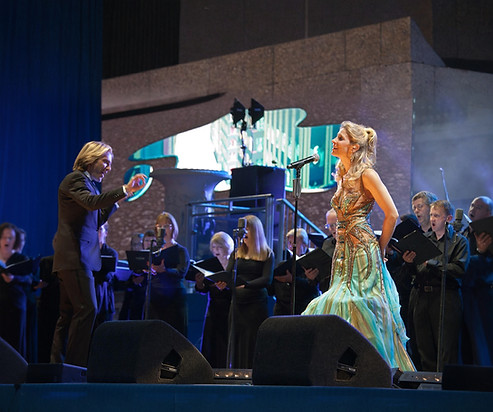
As part of the lessons, we regularly organize concerts and recitals, offering students opportunities to perform on stage. These live performances allow them to assess the progress they’ve made and deepen their practical learning. It also provides a chance to develop stage presence and audience communication skills, fostering confidence as professional performers. Through this practical instruction, we support each participant in confidently expressing their own voice.
The Aim of Emiliano Blasi’s Vocal Lessons
The voice is not merely a sound, but an “instrument” in which body, mind, and emotions are united. Emiliano Blasi’s vocal lessons aim not only to improve technique but also to understand and make full use of one’s own voice. By exploring the essence of vocal production and deepening musical expression, students cultivate a singing voice where “resonance,” “expression,” and “emotion” are fully integrated.

Exploring the Essence of the Voice
– A Fundamental Approach to Vocal Production
For Emiliano Blasi, the most important aspect of studying vocal music is pursuing “natural and effortless vocal production.” His teaching does not focus on “producing a loud sound” or “forcing high notes,” but rather on drawing out the resonance of the voice you already have and learning to control it in a relaxed and natural way.
Based on the idea that “the voice is created with the entire body,” his lessons emphasize the coordination of breathing, posture, resonance, and phonation. For example, by becoming aware of how to use the diaphragm, students learn to ensure a natural airflow and stabilize the voice without straining the throat. Regarding resonance, he explains that “just changing the place where sound resonates dramatically alters the voice,” and he teaches the use of the head, chest, and oral cavities as key resonating areas that create rich and full vocal tones.


Vocal Practice Utilizing “Support” and “Resonance”
Both support (appoggio) and resonance are essential in vocal production. Support refers to the technique of properly controlling the diaphragm to create vocal stability, forming the foundation for sustained and effortless sound production. Resonance enriches the tone and broadens expressive range by using different areas such as the head, nasal cavities, chest, and mouth.
In lessons, students learn vocal techniques not only for opera, art songs, and sacred music, but also for contemporary genres like pop, rock, and musicals. Classical singing emphasizes deep resonance, pop and rock focus on microphone-based projection, and musicals require clear diction and wide vocal dynamics—each genre is approached with its own suitable technique.
Since unnecessary tension in the neck and shoulders can block vocal flow, posture and breathing are also adjusted to maintain a relaxed state for vocalization. By balancing support and resonance, students can achieve a richer, more sustainable, and natural voice.
Understanding Vocal Mechanisms and Reclaiming Your Natural Voice
Emiliano Blasi points out that “many people are unaware of the natural resonance of their voice.” Trying to make the voice louder by forcing it, or straining the throat to reach high notes, can diminish its natural sound and increase pressure on the throat. In truth, the voice should be produced using the entire body, not just the throat.
In the lessons, students learn how the vocal cords and resonating chambers function, and how to use their body efficiently for natural vocal production. For example, by adjusting the flow of breath, unnecessary tension is released, allowing the voice to resonate naturally with the breath. By maintaining proper posture and avoiding excess tension in the chest or throat, effortless and resonant sound can be achieved. Furthermore, by learning how to adjust resonance, it becomes possible to develop a richer voice that can carry further.
The goal is not to manufacture the voice, but to free the voice that already exists within. Many people restrict their vocal potential due to incorrect habits, but by understanding the correct vocal mechanisms, they can rediscover their body’s natural resonance and nurture a voice that expresses itself freely and effortlessly.

Professional Use of the Voice and Achievements
The voice plays a vital role not only for singers, but also in many other professions. Actors, voice actors, monks, teachers, and business professionals take lessons to develop greater expressiveness and refined vocal techniques. In each field, they use the power of their voice to expand their opportunities. For instance, a monk once attended lessons with the goal of deepening the resonance used during sutra chanting.
In the business world as well, the voice has a significant impact. Increasingly, corporate leaders and public speakers are taking lessons to make their presentations and speeches more persuasive. Enhancing vocal resonance and articulation, along with refining tone and expressiveness, can dramatically improve how their message is received by the audience.
Furthermore, the instruction incorporates scientific knowledge of vocal mechanisms, helping students to understand how the vocal cords and resonance points function. This allows them to acquire vocal techniques grounded in theory, rather than relying solely on intuition—making it possible to develop a compelling voice in any professional context.
Refining Your Voice Means Facing Yourself
“The voice reflects a person’s way of life and emotional state,” says Emiliano Blasi. Refining one’s voice is not only about improving technique—it is also a process of deep self-exploration. By becoming aware of posture, breathing, and the use of resonance while singing, we learn to reconsider how we use our body and release unnecessary tension. This affects not only vocal performance but also the quality of breathing and speaking in daily life, contributing to emotional balance and confidence in self-expression.
Exploring the potential of your own voice and drawing it out fully leads to greater freedom in expression. Discovering which kind of resonance feels most natural and how to use your voice to communicate more clearly deepens self-awareness, creating harmony between the voice and the inner self.
Through these lessons, as the voice begins to resonate more easily and richly, both singing and speaking abilities expand. Refining your voice becomes a vital first step toward understanding yourself more deeply and achieving a more natural and compelling form of expression.

Supported Genres & Training Areas
The lessons are adapted to a wide range of genres and vocal approaches while respecting the individuality and goals of each student. While rooted in opera and classical vocal tradition, the training also embraces musical theatre, pop, rock, contemporary music, crossover styles, and modern vocal expression. Both delicate resonance-focused singing and stronger contemporary vocal production — including belting, powerful projection, and microphone-based performance styles — can be explored naturally within the lessons.
Opera & Classical Voice
Pop & Contemporary Repertoire
Jazz & Crossover Styles
Mixed Voice Coordination
Freedom in the Upper Register
Vocal Stamina & Sustainable Singing
Microphone Awareness & Performance
Expression, Interpretation & Communication
Voice Training for Professional Voice Users
Musical Theatre
Rock Vocals & Contemporary Vocal Expression
Film Music & Stage Performance
Belting & Contemporary Voice Techniques
Breath & Resonance Awareness
Healthy and Sustainable Vocal Freedom
Diction, Language & Articulation
Speaking Voice & Vocal Presence
Voice Guidance Adapted to Individual Vocal Needs
Lesson Format

Lessons are available both in person and online, allowing flexible scheduling according to each student’s goals and environment.
Even within online lessons, careful attention is given to subtle vocal control, resonance, musical phrasing, and expressive nuance. Whether online or in person, the lessons value a highly individualized approach adapted to the unique qualities and challenges of each voice.
All lessons also include piano accompaniment, allowing students to develop musical expression practically through pitch, rhythm, phrasing, and interpretation.
Lessons are open to everyone from complete beginners to professional performers.
Available Lesson Formats
-
One-on-One Private Lessons
-
In-Person Lessons
-
Online Lessons Available
-
Suitable for Beginners to Professionals
-
Available in English & Italian
Japanese support available when needed
Student Voices
The experience of working with the voice is different for every individual. For some, it means returning to the foundations of vocal technique. For others, it means discovering the connection between breath, body, and resonance. For many, it becomes a way of understanding their own voice more deeply and encountering possibilities they had never noticed before. Here are reflections from students who have studied with Maestro Emiliano Blasi over the years.
“For the first time, I was able to understand the foundations of vocal technique in a truly concrete way.”
Although I studied classical singing at a music university, vocal technique always felt extremely difficult, and for a long time I was unsure of how to use my own voice.
What surprised me most in Maestro Emiliano Blasi’s lessons was that he did not simply tell me to “create more resonance” or “release the tension.” Instead, he explained in detail what was actually happening in my body and in my voice at that precise moment.
By singing, observing the breath, changing the way the body was being used, and listening carefully to the resulting changes in resonance, things that had previously felt vague gradually began to make sense.
Precisely because I already had experience studying classical voice, I was deeply impressed to discover a way of working that returns so carefully to the foundations and allows me to understand not only what to do, but also why the voice responds in a certain way.
Soprano / Experienced Classical Voice Student
“I came to understand that the body itself is the instrument — and I could hear the difference in my own voice.”
Through Maestro Emiliano Blasi’s lessons, I began to understand that the voice is not produced by the throat alone, but that the whole body functions as a single instrument.
By working step by step with breathing, muscular coordination, and the opening of the throat, I could hear how even small changes in the way I used my body immediately affected the resonance of my voice.
Rather than simply repeating high or low notes, I learned to understand how the body can be used so that the voice resonates more naturally. Over time, both my lower and upper range became easier, and my vocal range expanded.
He also demonstrates directly with his own voice, which makes it possible to understand through listening what words alone cannot always explain: resonance, phrasing, direction, and musical intention.
Being able to learn the sound of the Italian language and how words can become part of musical expression is another reason why these lessons have remained so valuable to me over the years.
Soprano / Classical Voice Enthusiast — 12 Years of Study
“Rather than applying a fixed vocal method, he listens to the voice I have that day.”
What I particularly appreciate about Maestro Emiliano Blasi’s lessons is that he does not apply the same vocal solution to every student.
He listens to the voice as it is that day, observes the condition of the body, and identifies what is needed at that particular moment.
We may begin by singing something, then slightly change the breath or the way the body is being used. The voice changes. But instead of simply saying that it is “better,” he helps me understand what changed, why it changed, and what made the voice respond differently.
Rather than imposing a predetermined answer, he guides me toward understanding my own voice and body more clearly. This means that every lesson brings a new discovery.
Being able to study seriously while finding an approach that truly suits my own voice is one of the greatest strengths of his teaching.
Mezzo-Soprano / Dedicated Classical Voice Enthusiast
“Even after eight years, every lesson still feels fresh.”
I have been studying with Maestro Emiliano Blasi for eight years, and even now, each lesson continues to bring new discoveries.
I originally began because I wanted to rebuild my vocal technique from the foundations.
Rather than focusing only on what I cannot yet do, he identifies what I need at that particular stage and guides me forward step by step.
The voice is never treated in isolation. Breath, the condition of the body, and even one’s overall physical and mental state are considered as part of the work, so I never feel that I am simply repeating the same exercises.
Over the years, the things I am able to do have gradually expanded. I can now take on operatic ensembles and works that I once only dreamed of singing.
The fact that, even after eight years, I am still discovering new things and continuing to expand the possibilities of my own voice is one of the main reasons I have continued these lessons for so long.
Soprano / Classical Voice Enthusiast — 8 Years of Study
“In my seventies, a completely new world opened up to me — the possibility of singing opera myself.”
For many years, singing opera in Italian felt like something belonging to a world far removed from my own.
I knew very little Italian, and I wondered whether, in my seventies, I would truly be able to do something like this.
Maestro Emiliano Blasi never rushed me when I could not yet do something. Instead, he began with what I could understand and guided me carefully, one step at a time.
The lessons were not simply about learning the notes and reaching the end of a piece. Little by little, I began to learn Italian pronunciation, the meaning of the words, musical flow, and expression.
Through that process, I gradually began to feel, “Perhaps I really can sing opera.”
To begin something new in my seventies and discover a musical world I had never known before has been a profound source of joy.
Through singing, I have come to feel that regardless of age, it is still possible to learn something new and continue moving forward.
Tenor / Classical Voice Enthusiast — 70s
Our Services
 Available Online
For both the singing and speaking voice. Your first 45 minutes to discover your voice.
45 min
5,000 Japanese yen Available Online
For both the singing and speaking voice. Sixty minutes to explore the potential of your voice more deeply.
1 hr
12,000 Japanese yen Available Online
Sixty minutes for children to discover the joy of singing and nurture the voice of the future.
1 hr
8,000 Japanese yen
Discover VOX AUREA METHOD
Discover the philosophy and complete vision of the VOX AUREA METHOD—an integrated approach that unites voice, breath, body, awareness, and expression.
(Click the image below to visit the VOX AUREA METHOD page.)


